Cold Air, Pollution & Indoor Triggers Explained.
By Dr. Rashid Parvez
F.C.C.P. (USA) | Ex-Senior Resident (AIIMS, New Delhi)
Chest, Respiratory & Critical Care Specialist
Ambition Hospital
Introduction:
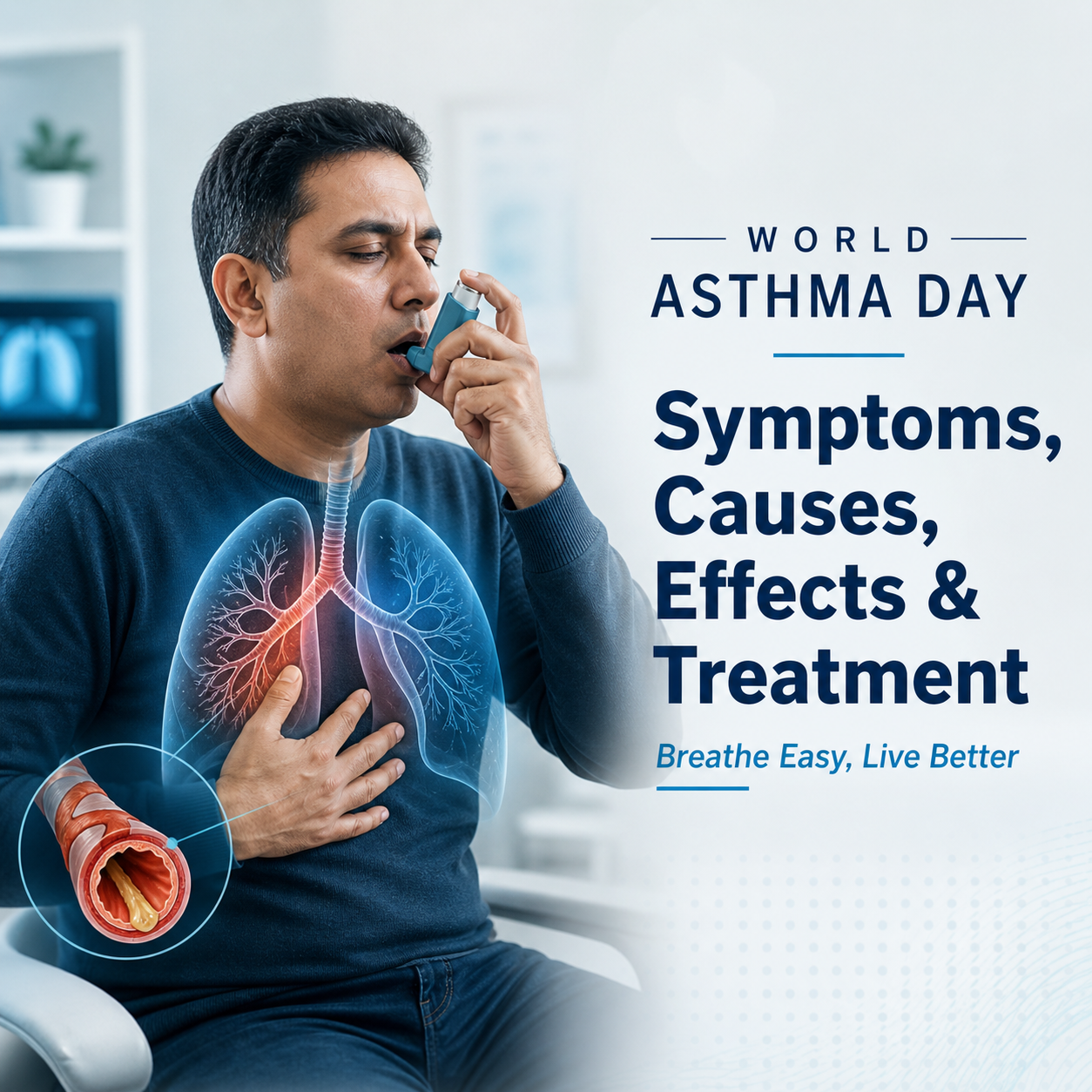
Every winter, pulmonology clinics and emergency departments witness a significant rise in asthma-related complaints. Patients report increased wheezing, breathlessness, chest tightness, night-time coughing, and frequent use of inhalers.
Search trends such as “asthma worse in winter,” “cold air asthma,” “pollution asthma attack,” and “winter breathing problem” spike sharply during this season.
Winter does not create asthma—but it intensifies the triggers that provoke asthma attacks.
Understanding why asthma worsens in winter is essential for prevention, early intervention, and avoiding serious complications.
What Is Asthma and Why Is It Sensitive to Winter?
Asthma is a chronic inflammatory disease of the airways. In asthma patients, the airways are already sensitive. Exposure to certain triggers causes:
Airway narrowing (bronchospasm)
Increased mucus production
Reduced airflow
Difficulty breathing
Winter introduces multiple environmental and indoor factors that simultaneously irritate these sensitive airways.
- Cold Air: A Direct Trigger for Asthma Attacks
Cold air is one of the strongest natural triggers for asthma.
How Cold Air Affects the Airways
Cold, dry air causes sudden tightening of airway muscles
It irritates the airway lining
Triggers reflex bronchospasm
This leads to:
Sudden breathlessness
Wheezing
Chest tightness
Exercise-induced asthma in winter
Patients often experience worsening symptoms:
Early morning
Late night
During outdoor exposure
- Winter Air Pollution & Smog: A Major Asthma Aggravator
Why Pollution Increases in Winter
Temperature inversion traps pollutants near ground level
Reduced air movement
Increased vehicle emissions, biomass burning, and industrial smoke
Cities like Varanasi, Delhi, Lucknow, and Kanpur frequently record AQI levels above 300–400 during winter.
Role of PM2.5 in Asthma
PM2.5 particles are microscopic and penetrate deep into the lungs, causing:
Severe airway inflammation
Increased asthma attacks
Reduced lung function
Poor response to usual inhalers
Winter smog acts as a chemical irritant, making asthma control extremely difficult.
- Indoor Triggers Increase During Winter
During cold months, people stay indoors longer, unintentionally increasing exposure to indoor asthma triggers.
Common Indoor Triggers Include:
Room heaters and blowers
Poor ventilation
Cooking smoke
Incense sticks (agarbatti)
Mosquito coils
Dust mites and mold
Pet dander trapped indoors
Indoor air pollution in winter can sometimes be worse than outdoor pollution, especially in closed rooms.
- Winter Infections Trigger Asthma Exacerbations
Respiratory infections spread more easily in winter due to:
Lower immunity
Crowded indoor environments
Cold-induced immune suppression
Even a mild viral cold can:
Trigger severe asthma attacks
Lead to bronchitis or pneumonia
Require hospitalization in uncontrolled asthma patients
Children, elderly patients, and those with long-standing asthma are particularly vulnerable.
- Why Night-Time Asthma Worsens in Winter
Many patients complain that asthma symptoms worsen at night during winter.
This happens due to:
Cold air exposure at night
Lying down increases airway resistance
Accumulation of mucus
Reduced indoor ventilation
Increased exposure to dust mites in bedding
Night-time asthma is a warning sign of poor asthma control.
- Who Is at Highest Risk in Winter?
Asthma attacks are more frequent and severe in:
Long-standing asthma patients
Children with allergic asthma
Elderly individuals
Smokers and passive smokers
Patients with sinusitis or nasal allergies
Post-COVID lung patients
These groups require extra monitoring during winter months.
- Symptoms That Should Never Be Ignored
Seek medical attention immediately if you experience:
Increasing breathlessness
Wheezing not relieved by inhaler
Night-time cough disturbing sleep
Chest tightness
Frequent inhaler use
Falling oxygen levels
Fatigue with minimal activity
Ignoring symptoms can lead to severe asthma attacks or respiratory failure.
- How to Prevent Asthma Attacks in Winter
8.1 Protect Yourself from Cold Air
Cover nose and mouth with a scarf
Avoid direct cold air exposure
Warm up before outdoor activity
8.2 Monitor Air Quality (AQI)
Avoid outdoor activity during high AQI
Especially avoid early morning and late evening exposure
8.3 Use Inhalers Regularly (Not Only During Attacks)
Preventive inhalers reduce airway inflammation
Skipping medicines in winter increases risk
8.4 Improve Indoor Air Quality
Ensure proper ventilation
Avoid incense sticks and smoke
Use HEPA air purifiers if needed
8.5 Get Timely Medical Review
Winter dosage adjustments may be required
Lung function tests help assess control
- Can Winter Asthma Become Life-Threatening?
Yes. Poorly controlled asthma combined with pollution and infection can lead to:
Severe asthma attacks
ICU admission
Respiratory failure
Increased risk of death
Early medical intervention prevents these complications.
Expert Advice from Dr. Rashid Parvez
“Winter does not cause asthma, but it amplifies every trigger that worsens it. Cold air, pollution, indoor smoke, and infections act together. Asthma patients must be proactive in winter—prevention is far safer than emergency treatment.”
When to Consult a Pulmonologist
Consult immediately if:
Symptoms persist beyond 48–72 hours
Inhalers are not giving relief
Night-time symptoms increase
Oxygen levels fall
Recurrent winter attacks occur
Contact for Asthma & Lung Care
Ambition Hospital
👨⚕️ Dr. Rashid Parvez
Chest, Respiratory & Critical Care Specialist
📍 Maqbool Alam Road, Khajuri, Varanasi
📞 +91 96964 17632 | +91 83038 23891
🌐 www.ambitionhospital.com
Final Thoughts:
Asthma control during winter requires awareness, discipline, and medical guidance.
Cold air, pollution, and indoor triggers may be unavoidable—but asthma attacks are preventable.
Do not wait for breathing to worsen.
Early care saves lungs, lives, and long-term health.