Sarcoidosis is an inflammatory disease that can affect multiple organs in the body, but it most commonly impacts the lungs and lymph nodes. In this condition, small clusters of inflammatory cells called granulomas form in different tissues. These granulomas can interfere with the normal functioning of affected organs and, if left untreated, may lead to long-term complications.
Many people are unaware of Sarcoidosis and often mistake its symptoms for common respiratory infections, allergies, asthma, or a persistent cough. Because the symptoms can be vague and develop gradually, diagnosis is sometimes delayed. Early detection and proper treatment can help control inflammation, prevent organ damage, and improve quality of life.
What is Sarcoidosis?
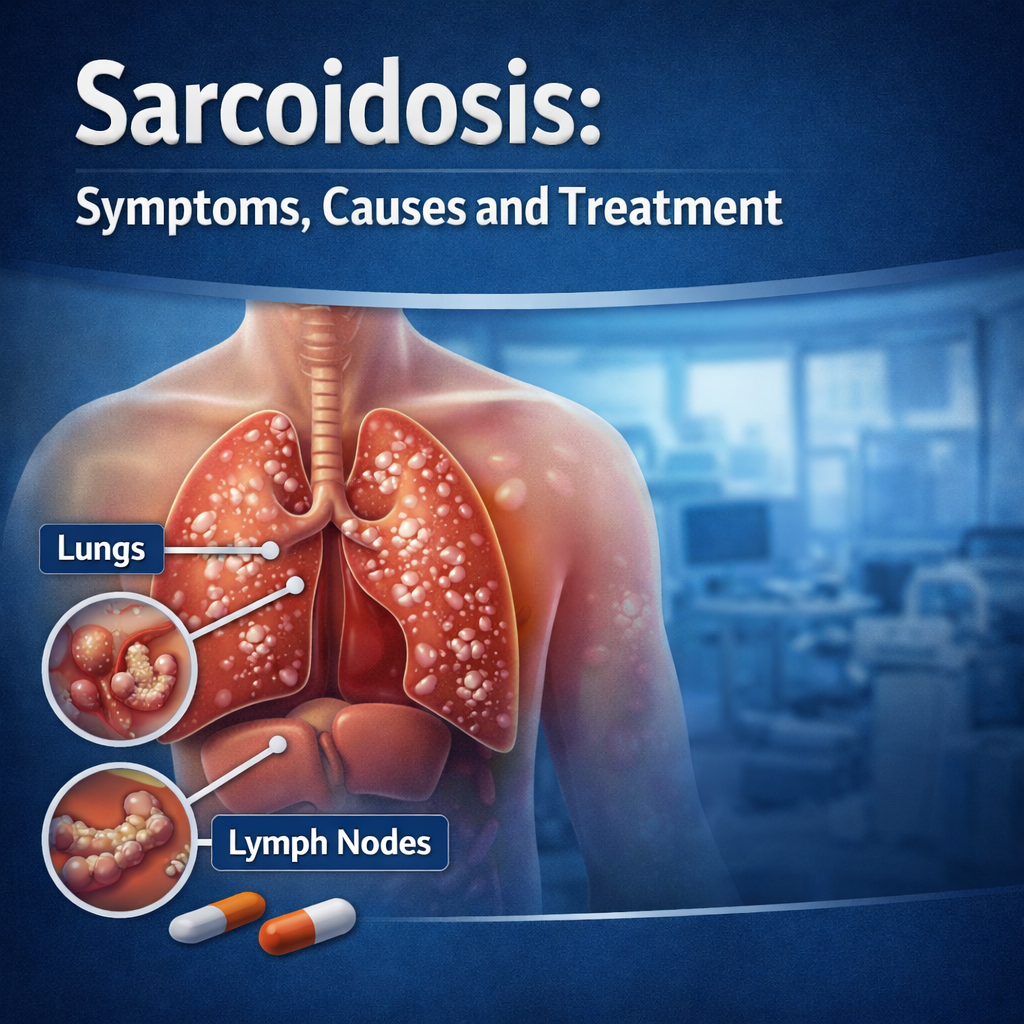
Sarcoidosis is a chronic inflammatory condition in which the body’s immune system reacts abnormally and forms granulomas in different organs. While the disease can affect almost any organ, the lungs and lymph nodes are involved in the majority of cases.
Granulomas are tiny clumps of immune cells that develop when the body responds excessively to a trigger. In many patients, these granulomas disappear on their own. However, in some cases they persist and cause inflammation, scarring, and reduced organ function.
Sarcoidosis can affect people of all ages, but it is most commonly diagnosed in adults between 20 and 50 years of age. The severity of the disease varies greatly from person to person. Some individuals experience mild symptoms, while others may develop serious complications involving the lungs, eyes, skin, heart, or nervous system.
Causes of Sarcoidosis
The exact cause of Sarcoidosis remains unknown despite extensive research. Experts believe that the disease develops when the immune system overreacts to certain environmental or infectious triggers in genetically susceptible individuals.
Possible contributing factors include:
- Overactive immune system response
- Genetic predisposition
- Exposure to environmental irritants such as dust, chemicals, or pollutants
- Certain bacterial or viral infections that may trigger immune reactions
- Occupational exposure to substances that irritate the lungs
Researchers continue to study why some people develop Sarcoidosis while others exposed to similar conditions do not.
It is important to note that Sarcoidosis is not contagious and cannot spread from one person to another through contact, coughing, or sharing personal items.
Symptoms of Sarcoidosis
The symptoms of Sarcoidosis vary depending on which organs are affected and how severe the inflammation is. Some patients may have no symptoms at all and are diagnosed incidentally during routine imaging tests.
When the lungs are involved, common symptoms include:
Respiratory Symptoms
- Persistent dry cough
- Shortness of breath, especially during physical activity
- Chest pain or discomfort
- Wheezing or noisy breathing
These symptoms occur because granulomas and inflammation affect the airways and lung tissue, making it harder for the lungs to function normally.
General Symptoms
- Fatigue and weakness
- Fever
- Unexplained weight loss
- Night sweats
- Reduced energy levels
These symptoms are caused by ongoing inflammation in the body and can significantly affect daily activities.
Skin Symptoms
Some patients develop skin-related manifestations such as:
- Red, tender bumps on the legs (erythema nodosum)
- Skin rashes
- Darkened or discolored patches of skin
- Raised skin lesions
Skin symptoms may sometimes be among the earliest signs of Sarcoidosis.
Eye Symptoms
Sarcoidosis can affect the eyes and may cause:
- Eye redness
- Irritation or burning sensation
- Sensitivity to light
- Blurred vision
- Eye pain
Untreated eye involvement can occasionally lead to vision problems, making regular eye examinations important for affected patients.
Lymph Node Symptoms
- Swollen lymph nodes in the neck, chest, or other areas
- Tenderness around enlarged lymph nodes
If these symptoms persist for several weeks or continue to worsen, medical evaluation by a chest specialist is strongly recommended.
How Does Sarcoidosis Affect the Lungs?
The lungs are affected in approximately 90% of Sarcoidosis cases. Granulomas can develop within lung tissue and lymph nodes inside the chest, causing inflammation and affecting normal breathing.
Initially, patients may experience only mild symptoms such as cough or breathlessness. However, if inflammation continues for a prolonged period, it can lead to permanent scarring of lung tissue, known as pulmonary fibrosis.
Potential complications include:
- Reduced lung function
- Chronic respiratory problems
- Pulmonary fibrosis
- Decreased oxygen levels in the blood
- Severe breathing difficulties
- Pulmonary hypertension in advanced cases
Because lung damage can become irreversible, early diagnosis and treatment are essential to preserve lung function.
Diagnosis of Sarcoidosis
Diagnosing Sarcoidosis can be challenging because its symptoms often resemble those of tuberculosis (TB), asthma, pneumonia, or other lung diseases. A thorough evaluation is necessary to confirm the diagnosis.
Your doctor may recommend:
Chest X-ray
A chest X-ray is often the first imaging test performed. It can reveal enlarged lymph nodes or abnormalities in the lungs that suggest Sarcoidosis.
High-Resolution CT (HRCT) Scan
An HRCT scan provides detailed images of the lungs and helps identify granulomas, inflammation, and scarring more accurately than a standard X-ray.
Pulmonary Function Tests (PFTs)
These tests measure how well the lungs are working by assessing airflow, lung capacity, and oxygen exchange.
Blood Tests
Blood investigations help evaluate inflammation, organ involvement, and overall health status. Certain blood markers may support the diagnosis.
Bronchoscopy
During bronchoscopy, a thin flexible tube with a camera is inserted into the airways to examine the lungs and collect tissue samples if needed.
Biopsy
A biopsy involves removing a small tissue sample from the affected area. It is often considered the most reliable way to confirm the presence of granulomas and establish the diagnosis.
These investigations help differentiate Sarcoidosis from tuberculosis (TB), fungal infections, lung cancer, and other respiratory disorders.
Treatment of Sarcoidosis
Not every patient with Sarcoidosis requires immediate treatment. In some cases, the disease resolves spontaneously without causing significant damage. However, patients with persistent symptoms, organ involvement, or progressive disease usually require medical management.
Treatment options may include:
Corticosteroid Medications
Steroids such as prednisone are the most commonly prescribed medications. They help reduce inflammation and control symptoms effectively.
Anti-inflammatory Drugs
These medications may be used in selected cases to manage inflammation and improve patient comfort.
Immunosuppressive Therapy
For patients who do not respond adequately to steroids or require long-term treatment, immunosuppressive medications may be recommended to control immune system activity.
Symptom-Specific Treatment
Additional treatments may be prescribed depending on which organs are affected, such as eye medications, skin treatments, or respiratory therapies.
Regular Monitoring and Follow-Up
Even when symptoms improve, regular follow-up appointments are important. Doctors may repeat imaging studies and lung function tests to monitor disease progression and treatment response.
The treatment plan is individualized based on disease severity, organ involvement, patient age, and overall health condition.
Lifestyle Tips for Patients with Sarcoidosis
Along with medical treatment, certain lifestyle measures can help improve overall health and lung function:
- Avoid smoking and exposure to secondhand smoke
- Stay physically active as advised by your doctor
- Follow a balanced and nutritious diet
- Maintain a healthy body weight
- Get adequate sleep and rest
- Attend regular follow-up appointments
- Avoid exposure to dust, chemicals, and environmental pollutants whenever possible
These measures can support recovery and help reduce the risk of complications.
When Should You See a Doctor?
Consult a Chest Physician if you experience:
- A cough lasting more than three weeks
- Persistent shortness of breath
- Ongoing chest pain or discomfort
- Unexplained weight loss
- Chronic fatigue
- Recurrent fever without a clear cause
- Eye redness or vision problems
- Persistent skin rashes or swollen lymph nodes
Seeking medical attention early can improve treatment outcomes and reduce the likelihood of permanent organ damage.
Advanced Sarcoidosis Care at Ambition Hospital
At Ambition Hospital, Varanasi, our Chest and Respiratory Care Department offers comprehensive diagnostic and treatment services for lung diseases, including Sarcoidosis. Under the expert guidance of Dr. Rashid Parvez, patients receive accurate diagnosis, advanced imaging evaluation, pulmonary function assessment, personalized treatment plans, and long-term follow-up care.
Our goal is to identify the disease at an early stage, manage symptoms effectively, preserve lung function, and improve overall quality of life for every patient.
Conclusion
Sarcoidosis is a complex but manageable inflammatory disease that can affect multiple organs, particularly the lungs. Symptoms such as persistent cough, breathing difficulties, fatigue, chest discomfort, skin changes, or eye problems should never be ignored. Although the exact cause remains unknown, advances in diagnosis and treatment have significantly improved outcomes for patients.
With timely diagnosis, expert medical care, appropriate treatment, and regular follow-up, most individuals with Sarcoidosis can successfully manage the condition and lead healthy, productive lives.
If you are experiencing respiratory symptoms or have concerns about your lung health, consult the specialists at Ambition Hospital, Varanasi, for expert evaluation and comprehensive Sarcoidosis care.
Expert Care, Trusted Hands—Schedule Your Visit to Ambition Hospital Today!
Location: Opp. Sirona Diagnostic, Maqbool Alam Road, Khajuri, Varanasi
Phone: +91 83038 23891, +91 96964 17632